
Manufacturing at the Edge
Quality, throughput, and predictive maintenance without cloud latency
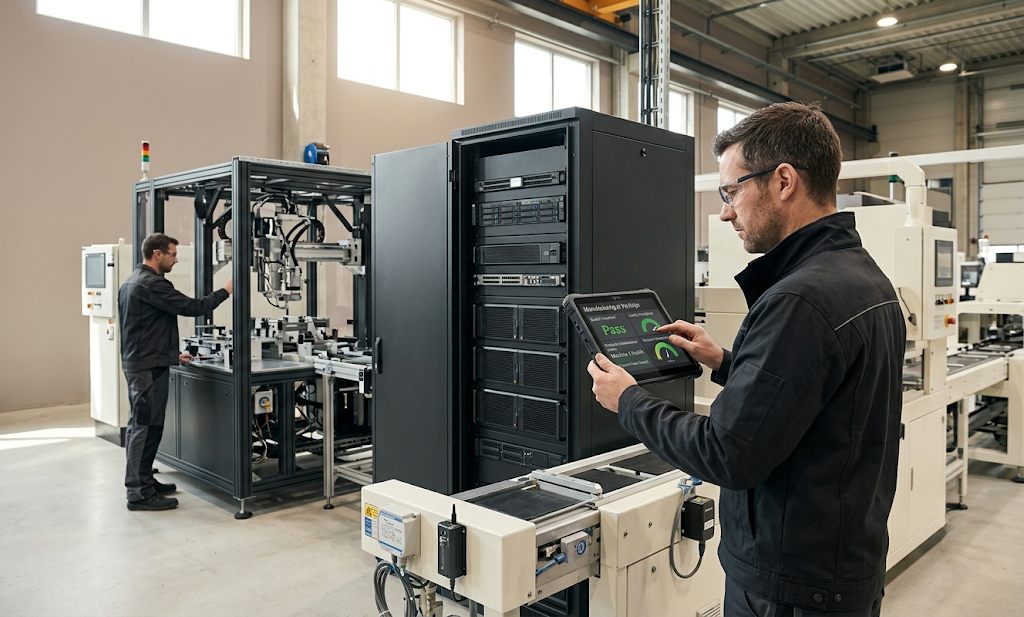
How manufacturing companies deploy on-device vision and anomaly detection across production lines for real-time quality control.
“When a defect costs thousands per minute, inference cannot wait for the cloud.”
Manufacturing companies run on precision and uptime. A single undetected defect on a high-speed line can cascade into scrap, rework, warranty claims, and unplanned downtime that ripples through the entire supply chain. Traditional quality control (manual sampling, offline lab checks, and rule-based machine vision) struggles to keep pace with modern production speeds and the growing variety of products that flow through flexible manufacturing cells.
Aerbix helps plants move computer vision, vibration analysis, and predictive maintenance models directly onto edge gateways co-located with PLCs and cameras. Instead of streaming every frame to a distant data center, inference runs locally, flagging anomalies in milliseconds, triggering line stops only when necessary, and keeping sensitive production data on the factory floor where IT and OT security teams can govern it.
Why the cloud alone falls short on the factory floor
Consider a bottling line running at six hundred units per minute. A camera inspecting fill levels and cap alignment generates thousands of frames every second. Round-tripping that video to a cloud region adds anywhere from eighty to three hundred milliseconds of latency, an eternity when a misaligned cap needs to be rejected before the next station. By the time a cloud verdict arrives, dozens of defective units have already moved downstream.
Bandwidth economics compound the problem. Streaming raw high-resolution video from every inspection point across a plant can saturate uplinks and generate cloud ingestion bills that dwarf the value of the insights produced. Edge inference inverts the model: the heavy computation happens next to the sensor, and only compact, structured events (defect classifications, severity scores, and image crops of flagged regions) travel upstream for auditing and retraining.
What manufacturers deploy first
Most pilots start with visual inspection at choke points: weld quality, surface defects, label verification, and packaging integrity. These use cases have clear ground truth, measurable scrap-reduction targets, and existing camera infrastructure that can often be reused. A successful pilot at a single station typically pays for itself within a quarter and builds the internal confidence needed to expand.
From there, teams broaden into acoustic and vibration-based motor health monitoring, thermal imaging of electrical panels, and OEE dashboards fed by edge telemetry rather than batch ETL jobs. Predictive maintenance models watch spindle loads, bearing temperatures, and current draw to flag degradation weeks before failure, converting emergency downtime into planned maintenance windows scheduled around production demand.
Fleet operations across plants
The hard part of industrial AI is rarely the first model; it is running the fiftieth model across the twelfth plant. Aerbix fleet management gives operations teams a single pane for model versions, device health, and rollout status across facilities. Engineers promote a new defect-detection model to a staging cohort in one plant, validate precision and recall against live production, then roll it out globally with automatic rollback if drift is detected.
Role-based access control keeps plant technicians, corporate data scientists, and external integrators in their own lanes, while audit trails document exactly which model version made which decision, increasingly important as quality systems and customer audits extend into AI-assisted inspection.
Whether you operate one facility or a global network of sites, the operating model is the same: train centrally, deploy to the edge, monitor continuously, and improve with every production run. That loop, running quietly beside your lines, is how manufacturing at the edge compounds into a durable competitive advantage.
Discuss this deployment
Our solutions team helps map Aerbix to your fleet, licensing model, and integration requirements.
Talk to Aerbix